
Need support right now?
If you’re struggling right now, you don’t have to face this alone. You can call our free helpline on 08 08 16 89 111, or contact Samaritans any time on 116 123.
If you or someone you know is in immediate danger, call 999 now.
After a traumatic experience, it’s common to feel overwhelmed, anxious, or disconnected from what is happening around you.
Grounding techniques are simple exercises that can help bring your focus back to the present moment. They can be useful if you are feeling panicked, distracted, or unable to settle your thoughts.
You can use these techniques wherever you are, and at any time.
What grounding can help with
Grounding techniques are designed to gently interrupt overwhelming thoughts or feelings and help your body feel calmer.
They may help if you are:
- feeling anxious or panicked
- struggling to focus or think clearly
- feeling disconnected or “not quite present”
- experiencing strong emotions that feel difficult to manage.
You do not need to wait until things feel very intense. You can use grounding techniques at any point.
Finding what works for you
Not every technique will work in the same way for everyone, and what helps may change over time.
It is OK to try different approaches and come back to the ones that feel most helpful. Even small moments of focus can make a difference.
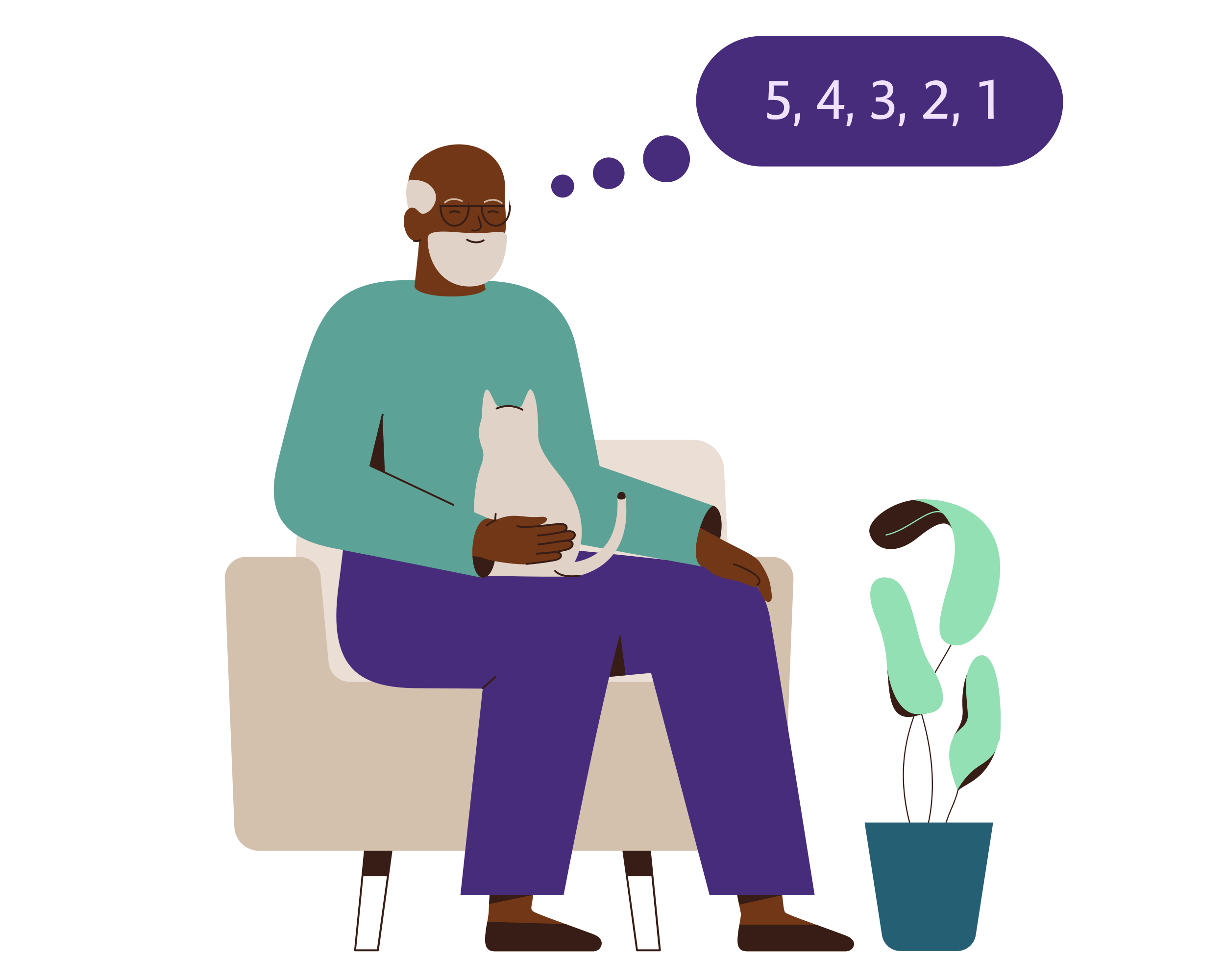
5, 4, 3, 2, 1 technique
This exercise uses your senses to help bring your attention back to your surroundings.
You can try to slowly notice:
- 5 things you can see
- 4 things you can feel
- 3 things you can hear
- 2 things you can smell
- 1 thing you can taste.
Take your time with each step. There is no right or wrong way to do this.
The short YouTube video below will guide you through this technique:
Video description: The above video introduces the “5, 4, 3, 2, 1 grounding technique” as a way to feel grounded when you’re overwhelmed or anxious. On-screen text presents the exercise step-by-step, counting down through the five senses: 5 things you can see, 4 things you can feel, 3 things you can hear, 2 things you can smell, and 1 thing you can taste. Each step is shown as a short prompt on screen, giving the viewer time to follow along. The video ends by encouraging the viewer to return to the exercise whenever they need help coming back to the present moment.
Timestamp: 00:00:03 – 00:07:19
Narrator: When you’re feeling anxious or overwhelmed, use all five senses to bring your attention back to the present moment.
Timestamp: 00:07:21 – 00:15:24
Narrator: Try to name five things you can see, such as furniture, lights, weather, plants, trees.
Timestamp: 00:15:26 – 00:24:02
Narrator: Four things you can feel, such as your hands, a pencil, a pillow, the ground beneath your feet.
Timestamp: 00:24:05 – 00:31:22
Narrator: Three things you can hear, such as a clock ticking, a car, a dog barking.
Timestamp: 00:31:25 – 00:37:10
Narrator: Two things you can smell, such as perfume or a candle.
Timestamp: 00:37:13 – 00:41:05
Narrator: One thing you can taste, such as coffee.
Timestamp: 00:41:08 – 00:53:04
Narrator: Noticing what’s happening right now can help to disrupt anxious thoughts. Check in with yourself at the end of the exercise. Do you feel calmer?
Timestamp: 00:53:07 – 00:56:02
Narrator: Repeat the five steps more than once if you need to.
Explore more techniques below
Different techniques work for different people. You might find one works well, or you may prefer to try a few and see what feels most helpful.
Slowing your breathing can help your body feel calmer.
You could try a method called box breathing:
- breathing in slowly through your nose for four seconds
- holding that breath for four seconds
- breathing out gently through your mouth for four seconds
- holding the exhale for four seconds.
Repeat this a few times, at a pace that feels comfortable.
If it helps, you can also try counting your breaths or placing a hand on your chest or stomach to feel the movement.
Holding or looking at an object can help bring your attention back to the present.
You might:
- hold something in your hand and notice how it feels
- focus on its texture, shape, or temperature
- describe it to yourself in your mind.
This can be especially helpful if your thoughts feel busy or overwhelming.
Sometimes it can help to focus on how your body feels.
You could try:
- placing your feet firmly on the ground
- pressing your hands together or into a surface
- noticing how your body feels in the chair or space around you.
This can help you feel steadier and more connected.
When to seek more support
Grounding techniques can help in the moment, but they are not a replacement for ongoing support.
If you continue to feel overwhelmed, anxious, or unsettled, you may want to speak to someone.
You can:
- contact your GP
- access NHS mental health services
- reach out to the Support Hub for Victims and Survivors of Terrorism for guidance.
Useful links
Immediate support
Practical help
Make a referral
Refer yourself or someone else to the Support Hub for Victims and Survivors of Terrorism.